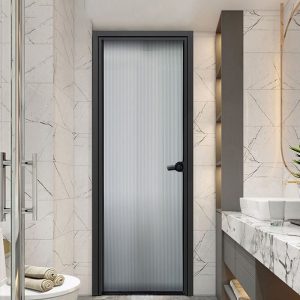
Comparing standard aluminum swing doors equipped with magnetic locks (maglocks) to automatic doors involves considering multiple factors, including security, accessibility, convenience, energy efficiency, and maintenance requirements. Here is a comparison that should give an indication of their differences:

Security: Maglocks provide strong locking forces, making them a fantastic addition to high-security areas. Their remote controls can provide extra protection, and many access control systems even include them for further safeguards.
Accessibility: These doors do not open automatically, however, maglocks can be released via a button or sensor and manually opened by hand – however this setup makes these less accessible to people with disabilities than fully automated doors.
Convenience: Once the maglock has been released, users must open the door manually, which requires extra effort and makes them less convenient than automatic doors when both hands are full.
Energy Efficiency: Magnetic locks don’t contribute much to energy savings; however, door closers may help ensure they close after being manually opened.
Maintenance: Maglocks require relatively minimal upkeep; however, regular inspections and adjustments may be required to maintain their alignment and functionality. Because their doors are manually operated, less mechanical parts could potentially fail over time.
Automatic Doors Security: Automatic doors may provide less protection than maglocked swing doors due to their design to open easily for ease of access, yet can still be integrated into access control systems and locked down when necessary.
Convenience: These doors offer maximum convenience, opening automatically upon approaching with motion sensors, pressure mats, or other activation devices.
Energy Efficiency: Installed properly, automatic doors can help conserve energy by only opening when required and promptly closing afterward to maintain indoor climate control. Furthermore, their speed can be adjusted in order to optimize energy use.
Maintenance: Automated doors contain numerous mechanical and electronic components that require regular attention for optimal operation and safety, including sensor function checks, door movement analysis, and safeguards against unwanted events. A review of safety mechanisms may also be necessary.
Other Factors Installation Cost: Automated doors tend to be more costly to install due to their intricate mechanisms and safety features; their installation usually is more costly than standard swing doors with maglocks.
Operating Costs: Automatic doors typically incur higher energy and maintenance costs than swing doors with maglocks. Safety Features: To prevent trapping or injury from closing on an object unexpectedly, automatic doors must include safety features like sensors that stop closing if obstacles are detected as part of their safety features.
Emergency Egress: Both door types can be designed to enable emergency egress; maglocks require extra care when using them to release quickly in an emergency and ensure unimpeded exiting.
Conclusion
Selecting between standard aluminum swing doors with maglocks and automatic doors depends heavily upon your specific needs. Maglocks on swing doors may be appropriate in environments requiring tight security measures such as server rooms; while in public places like shopping centers, hospitals, and airports where convenience and accessibility are key priorities, automatic doors may provide superior accessibility solutions.