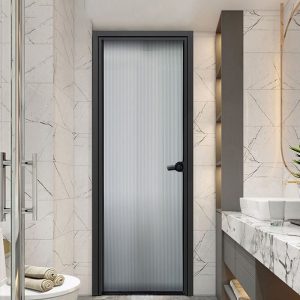
When buyers order aluminum windows and doors for a house, apartment development, hotel, or commercial building, they usually see only the finished product. Behind that finished window, however, is a manufacturing process involving several specialized materials and multiple production stages.
An aluminum window factory does not simply cut four pieces of aluminum, insert glass, and ship the finished unit.
The process begins much earlier with aluminum alloy production, profile extrusion and surface treatment. Glass must be cut and processed, hardware must be selected, and the finished components must then come together at the window factory for cutting, machining, corner assembly, glazing, sealing, inspection, and packaging.
Understanding this process is particularly useful for contractors, developers, architects, distributors, and importers sourcing custom aluminum windows and doors.
It explains why two visually similar windows can differ substantially in quality—and why a detailed specification matters more than a simple price per square meter.

It Starts With the Aluminum Profile
The aluminum frame is the structural foundation of an aluminum window or door, but the profile does not begin as the finished shape seen around the glass.
Production starts with aluminum alloy billets.
The source document identifies 6063-T5 and 6063-T6 as alloys used for aluminum window and door profiles, noting that T6 has greater hardness while T5 is commonly sufficient for typical window applications.
Once the alloy billet is ready, it moves to extrusion.
The billet is heated and forced through a specially designed die. The die determines the cross-sectional shape of the profile, allowing manufacturers to create frame sections, sash sections and other components required by a particular window system.
Freshly extruded aluminum does not yet have its final mechanical properties. According to the source document, the profiles are cut to length and then aged for approximately four to eight hours to increase their strength.
This explains an important point for project buyers:
An aluminum window system begins with engineering at the profile level, not at final assembly.
The geometry of the extrusion affects how glass, hardware, seals, drainage paths and connecting components can eventually work together.
Surface Treatment Gives Aluminum Its Architectural Finish
After extrusion and aging, the aluminum profiles move into surface finishing.
Before finishing, the profile surface needs to be prepared. Dust, oil, fingerprints and other contaminants left from manufacturing are removed so the coating or surface treatment can properly interact with the aluminum substrate.
The source describes several finishing processes, including powder coating, fluorocarbon coating, anodizing and electrophoretic finishing.
Powder coating and fluorocarbon coating follow a broadly similar principle: charged coating particles are applied to the profile under an electrostatic field before the coating is cured. Anodizing works differently, using an electrolytic process to form an oxide layer on the aluminum surface.
For buyers, surface treatment should not be viewed simply as choosing between black, white, gray or bronze.
The finish is part of the product specification.
On a large apartment, hotel, or commercial window project, color consistency and surface quality are especially important because hundreds of frames may appear on the same facade.
Hardware Is Small, but Its Role Is Critical
A window can have an excellent aluminum frame and good glass but still perform poorly if its hardware is incorrectly selected or assembled.
Hardware controls movement, locking and, depending on the design, part of the closing pressure between the sash and frame.
The source document divides hardware into several material categories. Stainless-steel components such as friction hinges and stays can be produced through cutting, stamping, punching and assembly. Zinc-alloy components such as handles, locks and hinges may go through casting, deburring, powder coating and final assembly. Plastic components such as rollers and lifting blocks can be injection molded before being combined with metal parts.
For a project buyer, however, the manufacturing method is only part of the issue.
The correct hardware must also match the window type, dimensions, sash weight and operating requirements.
A sliding window, casement window and commercial entrance door should not be expected to use the same hardware configuration.
That is why a serious aluminum window quotation should specify more than “hardware included.”
Tempered Glass Requires Its Own Production Process
Glass is another major component that follows a separate manufacturing route before reaching the window assembly line.
For tempered glass, the source describes a process in which the glass is first cut to the required dimensions and then heated in a tempering furnace to approximately 650°C before being rapidly cooled.
The document also notes an important production issue: tempered-glass processing can take around seven to ten days and may therefore become part of the critical path for an aluminum window project.
This matters when ordering customized windows.
Glass dimensions normally need to be determined before tempering. If dimensions change after processing, the finished tempered pane cannot simply be treated like an ordinary piece of unprocessed glass.
Accurate drawings and confirmed dimensions therefore help both quality control and production scheduling.
Insulated Glass Is More Than Two Pieces of Glass
Double-glazed or insulated aluminum windows are common in projects requiring improved thermal and acoustic performance.
But an insulated glass unit is not simply two panes placed next to each other.
The source describes an assembly involving glass panes, a spacer system containing desiccant, primary sealing and secondary sealing. It explains that the cavity is intended to contain dry gas and that assembly should take place in a controlled environment.
The production sequence described in the document includes filling the spacer with desiccant, applying butyl sealant, placing the spacer against cleaned and dried glass, pressing the panes together and applying a secondary seal.
This is why the phrase “double-glazed window” alone tells a buyer relatively little.
A more useful specification identifies the complete glazing build-up and relevant performance requirements.
Laminated and Low-E Glass Add More Options
Different buildings require different glass configurations.
The document describes laminated glass as two or more processed panes joined with PVB interlayers. It notes PVB thickness increments of 0.38 mm in the production process described, followed by heat and pressure treatment in an autoclave.
Low-E glass introduces another level of glazing specification.
The source discusses both online and offline Low-E coating processes and notes that the commonly used Low-E glass in its described workflow is offline-coated Low-E insulating glass. In the offline process, metal atoms are deposited onto the glass in a vacuum chamber to create the coating. Because that coating is comparatively vulnerable to oxidation, the document says this type is used within an insulated glass unit.
For buyers looking for energy-efficient aluminum windows, this demonstrates why “Low-E glass” should not be the end of the specification.
The complete glazing configuration matters.
The Window Factory Brings the Components Together
Once aluminum profiles, glass and hardware are available, actual window fabrication can begin.
The source describes the aluminum window factory as an integrator. Components produced by profile manufacturers, glass processors and hardware suppliers arrive at the factory and are further processed and assembled into complete aluminum windows and doors.
This distinction is useful when evaluating an aluminum window manufacturer.
Window production is partly a manufacturing operation and partly a supply-chain coordination process.
The factory must make sure the correct profile, glass, hardware and accessories all arrive in the right specification and at the right point in the production schedule.
Once the materials arrive, fabrication starts with cutting.
Precision Cutting Comes Before Assembly
Aluminum profiles are cut according to approved drawings.
For major frame, sash and mullion sections, the document describes the use of double-head cutting equipment. Cutting from both ends helps maintain dimensional accuracy.
After cutting, profiles may require drilling, milling and punching.
These operations create the holes, slots and other features required for hardware, drainage, connections and assembly.
This stage may not be visually impressive, but it has a direct effect on the finished product.
Poor cutting accuracy can create problems later when frame sections are joined. Misaligned holes or incorrectly machined slots can interfere with hardware installation. Inconsistent dimensions can also make assembly and installation more difficult.
In other words:
Good window assembly starts with accurate profile processing.
Corner Assembly Is a Critical Detail
After machining, individual profile sections must become a rigid frame or sash.
The exact corner-joining method depends on the profile design.
The source distinguishes between open-cavity and closed-cavity profiles and describes different joining methods, including screw fixing, mechanical connections and corner crimping. It also shows sealing being applied at selected joints to help prevent water penetration.
For casement window and door sashes using closed-cavity profiles, the document illustrates a process involving structural adhesive at the joint, corner cleats and mechanical corner crimping, followed by additional sealing.
These details are easy to overlook when looking at a finished window.
Yet corners are precisely where manufacturing accuracy, structural connection and sealing details come together.
A beautiful powder-coated frame means little if the corners are poorly assembled.
Glass Installation Depends on the Window Type
Glazing methods also vary according to the opening system.
For casement windows and fixed sections, the source describes placing glass setting blocks beneath the pane, installing glazing beads and using flexible plastic strips or blocks between the glass and aluminum before sealing the joint.
Sliding windows use a different approach.
The document shows rollers and weather strips being installed in the sash before the frame sections are assembled around the glass. Glass blocks, bolts, flexible strips and sealant are then used as part of the final assembly.
This reinforces another useful purchasing principle:
Different opening systems require different manufacturing details.
Casement windows, sliding windows, fixed windows and doors should therefore be evaluated as systems rather than as interchangeable aluminum frames.
Packaging Is Part of Manufacturing Quality
Quality control should not stop when assembly is complete.
Finished aluminum profiles can be scratched or damaged during storage, loading, transportation and construction-site handling. The source therefore calls for protective film to remain on frame and sash surfaces until close to project completion.
For export projects, this becomes even more important.
Windows may travel thousands of kilometers by truck and container before reaching the building site. Good export packaging should therefore be considered part of the supply specification rather than an afterthought.
A factory can manufacture an excellent window and still deliver a poor result if the product arrives damaged.
Where Manufacturing Problems Usually Appear
The source identifies fabrication accuracy as one of the major areas where production problems can occur.
Cutting errors may prevent profiles from fitting tightly during assembly. Loose screws can create installation problems after delivery. Missing sealant at required locations can affect the integrity of joints.
This is one reason experienced buyers focus on production control rather than judging a supplier only from showroom photographs.
Before placing a large commercial window and door order, buyers can ask questions such as:
How are profiles cut and machined?
How are frame and sash corners assembled?
How is glass installed?
What sealing materials are used?
How are dimensions checked?
How are finished surfaces protected before shipping?
These questions reveal much more about a manufacturer than a generic claim of “high quality.”
Why Production Lead Time Needs to Be Planned Early
Custom aluminum windows and doors involve multiple supply chains operating at the same time.
The source’s example production schedule allocates approximately 20–25 days for profile extrusion, surface treatment and delivery to the window factory, around 20 days for hardware, around 10 days for custom glass, and approximately three to five days for factory assembly. Because some processes run in parallel, the document gives a reasonable overall production period of approximately 23–30 days for the workflow it describes.
These figures should be treated as the document’s production example rather than a universal lead-time promise. Actual timing will vary with project size, profile availability, custom colors, glass configuration, hardware, testing, factory capacity and shipping arrangements.
Still, the underlying lesson is important:
Lead time begins with material planning, not with final window assembly.
For large apartment, hotel, villa or commercial projects, approving drawings, colors, glass and hardware early can help prevent delays later.
What Buyers Should Learn From the Manufacturing Process
A finished aluminum window looks simple because most of the complexity is hidden.
Behind it are alloy selection, extrusion, aging, surface finishing, glass processing, hardware production, precision cutting, machining, corner assembly, glazing, sealing and packaging.
That is why comparing aluminum windows only by price can be misleading.
Two suppliers may both quote a “double-glazed aluminum casement window,” while supplying different profile systems, surface finishes, glass configurations, hardware, sealing details and manufacturing tolerances.
A better sourcing process begins with a common specification.
Define the window type, dimensions, aluminum system, finish, glass configuration, hardware requirements, performance requirements and quantity. Then ask each supplier to quote against the same information.
For larger projects, architectural drawings, elevations, window schedules and BOQs make the comparison even more useful.
Understanding how aluminum windows and doors are manufactured changes the way buyers evaluate suppliers.
The visible frame and glass are only the final result of a much longer process. Aluminum profiles must be produced and finished correctly. Glass must be processed to the required specification. Hardware must match the opening system. Profiles must be accurately cut and machined. Corners must be assembled correctly, glass must be properly supported and sealed, and the finished units must be protected for delivery.
For contractors, developers, architects and importers buying custom aluminum windows, the most useful question is therefore not simply:
“What is your price per square meter?”
A better question is:
“What materials, manufacturing process and specifications are included in that price?”
That question makes it much easier to compare aluminum window manufacturers on an equal basis—and much harder for important differences in quality to disappear behind a low quotation.